Patent Translation Services For International Patent Filings
Filing-ready translations of patent applications, claims, specifications, drawings, prior art and office actions for PCT national phase entry, European patent validation and direct national filings.
The Strategic Role of Professional Patent Translation Services
Defining Patent Translation in a Legal Context
Patent translation is the highly specialised process of converting technical specifications, legal claims, and drawings into a target language while maintaining the exact scope of protection of the original filing. It is a discipline that sits at the intersection of three fields: advanced linguistics, specialised engineering (or life sciences), and international patent law.
The Gravity of Global IP Protection
For a business expanding into international markets, the patent translation is the only version of the invention that the foreign patent examiner will ever see. If the translation is ambiguous, the patent is vulnerable. Professional patent translation agencies serve as a defensive shield, ensuring that the legal "territory" you claim in your home country is exactly the same territory protected in the target country.
Errors in this field aren't just linguistic — they are financial. A mis-translation of a chemical formula or a mechanical tolerance can result in a patent being declared unenforceable during litigation, potentially costing a firm millions in lost licensing revenue or market exclusivity.
Language Accuracy Is a Legal Obligation, Not a Preference
Trusted by teams in
- Global Patent Law Firms & IP Chambers
- Corporate IP Departments
- Life Sciences & Pharmaceutical Firms
- Engineering & Technology Companies
- Universities & Research Institutions
- Government & Innovation Agencies
The Modern Edge: AI-Assisted Patent Translation
At LingArch, we do not shy away from technology — we harness it to create a more robust product. In 2026, the use of AI in translation is no longer optional, but its application must be surgical
How AI Enhances Consistency
We utilise Neural Machine Translation (NMT) engines specifically trained on millions of previous patent filings. This ensures that "Patentese" — the specific, repetitive language used by attorneys — is applied consistently across a 500-page specification.
Terminology Management
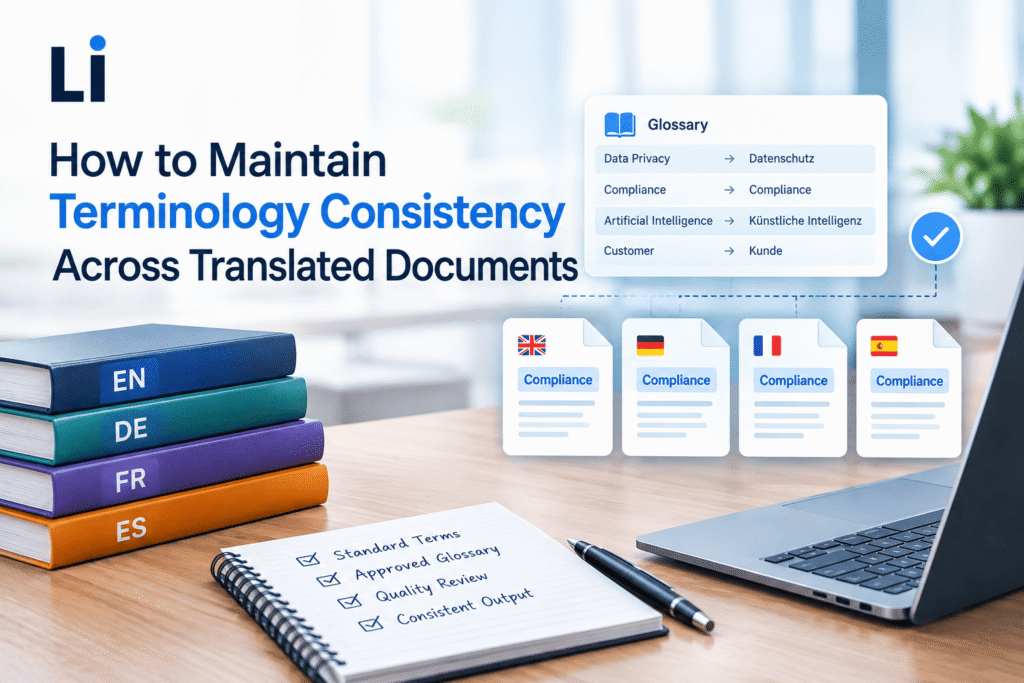
AI allows us to create project-specific glossaries. If a technical term is defined in the Description section, the AI ensures it is used identically in the Claims section — preventing the "different word, different meaning" trap that often leads to office actions.
The Human-Centric Safeguard
While AI provides speed and consistency, it lacks "legal foresight." An AI cannot understand the strategic reason why a lawyer chose the word "comprising" over "consisting of." Our PhD-level linguists oversee every AI-assisted output, providing the human judgement necessary to ensure the translated document is legally defensible in a court of law.
Trusted by Leading Brands





Explore the Seamless Benefits of the Services We Offer
LingArch offers a wide range of patent translation services to meet the diverse needs of our clients. Our services include:
Patent Application Translation
Converting the full specification, abstract, and claims for PCT or direct national-phase filings, formatted to the target office's precise technical requirements.
Patent Specification & Claims
The Claims section defines your legal boundaries. We translate with a focus on Breadth Management — ensuring the protection is as wide as the law allows.
Patent Litigation Translations
Certified translations of prior art, witness statements, and evidence for patent infringement cases and invalidity proceedings.
IP Portfolio Management
Centralised translation workflows for multinational firms, ensuring consistent technical vocabulary across every market you enter.
Office Action Translations
Rapid translation of examiner objections so your legal team can respond within statutory deadlines — full contextual awareness of the prosecution history.
Lawyer's Correspondence
High-level communication between international legal teams and their clients, requiring absolute confidentiality and tone-accuracy at every stage.
Experience and Global Support for Patent Translation
Quality Assurance: The Triple-Check Standard
Our patent translation firms operate under a zero-defect policy. Our process includes:
The strength of your IP protection is only as robust as the precision of its translation. At LingArch, we treat every claim as if it will be tested in court — because in international IP enforcement, it often is.
ISO 17100 Certified
GDPR Compliant
NDA Protected
Encrypted Systems
Drafting A native-speaking subject-matter expert performs the initial translation.

Technical Review A second specialist with an advanced degree in the relevant field checks for scientific accuracy.

Legal Audit A senior editor reviews the Claims to ensure the legal scope remains uncompromised and formatting meets jurisdictional standards.

Final Polish A proofreader checks for any typographical or grammatical slips that could diminish the professional standing of the filing.
Our Process

Step 1
Native Translation & SME Review
Your project is assigned to a native speaker who is also a Subject Matter Expert (SME). This ensures the translator understands the concept as well as the language.

Step 2
Independent Editing
A second, senior linguist reviews the initial translation against the source text. They check for nuance, terminological consistency, and adherence to the specific style guide.

Step 3
Final Proofreading & DTP
The third stage involves a final check for grammar, punctuation, and layout. Our Desktop Publishing (DTP) team ensures that the Japanese characters are rendered correctly in the final design format, avoiding common "broken character" issues in PDF or InDesign files.

Step 4
Technology Integration
We utilize advanced Translation Memory (CAT) tools. This ensures that if a specific legal term or brand phrase is used on page one, it is used identically on page five hundred, while also offering cost-savings for repeat content.
Why Choose LingArch

Faster Turnaround
24–48 hour delivery or same day upon request, with fast-track options available for urgent projects.

Transparency
Flat-rate pricing with real-time status updates. No hidden fees or surprise charges.

Certifications
ISO 9001, EN 15038, GDPR, and ATC-compliant workflows with industry-standard quality systems.

Expertise
20+ years of language service expertise with a proven track record across translation, interpretation, and transcription.

Security
Encrypted communication with NDA-bound linguists ensuring complete confidentiality and data protection.

Flexibility
120+ languages supported across all time zones with global coverage and local market expertise.


LingArch combines expert linguists, industry-specific knowledge, and cutting-edge technology to deliver fast, accurate, and reliable court reporting and translation services tailored to your business needs.
Industries we serve
Expert Patent Translation Services has unique requirements and regulatory standards. We understand the specific terminology, compliance needs, and cultural considerations that matter in expert patent translation services to ensure accurate, compliant translations that protect your business and facilitate global expansion.

Advertising and Public Relations
Creative and culturally adapted translations for marketing campaigns, brand messaging, and promotional content.

Automotive
Technical translations for automotive manuals, specifications, and regulatory compliance documentation.

Banking & Finance
Secure and compliant translations for financial documents, banking regulations, and investment materials.

Legal
Precise legal translations for contracts, court documents, and regulatory compliance materials.

Life Sciences
Expert translations for pharmaceutical documentation, clinical research, and biotechnology materials.

Media & Entertainment
Creative translations for film, television, gaming, and digital media content across global markets.

Retail & E-Commerce
Commercial translations for product catalogs, e-commerce platforms, and retail communications.

Travel & Hospitality
Tourism and hospitality translations for travel guides, booking platforms, and guest communications.
Cost Factors and Strategic Pricing
Many clients ask why patent translation services vary so widely in price. At LingArch, we believe in "Value-at-Risk" pricing.
Complexity of the Tech
A patent for a new type of cardboard box is naturally less expensive than a patent for a quantum computing algorithm.
Complex fields require linguists who can independently verify technical accuracy at every step.
Urgency
Patent filings have strict, non-negotiable deadlines. We offer Expedited Tiers for last-minute filings that require our teams to work across time zones.
Language Pairs
Rare language pairs (e.g., English to Hebrew or English to Finnish) require specialised, hard-to-find experts.
Common pairs are readily available; rare pairs reflect genuine specialist scarcity.
Formatting
Some patent offices require very specific margins, line numbers, and font sizes. Our Desktop Publishing (DTP) team ensures the final file is ready for upload, saving your paralegals hours of reformatting.
Benefits of Professional Patent Translation
Benefits of Professional Patent Translation
Legal compliance with international patent offices
Reduced risk of patent rejection due to linguistic ambiguity
Improved clarity for patent examiners and legal teams
Accurate preservation of the scope of patent claims
Accurate preservation of the scope of patent claims
Consistent terminology across all jurisdictions and documents
Related Services for International Patent Work
Patent attorneys, IP firms, businesses, researchers and inventors using our patent translation services may also need the related legal and technical support below.
Legal Translation Services
Translate licensing agreements, patent assignments, contracts, legal opinions and other IP-related documents with consistent legal terminology.
Document Translation Services
Translate technical reports, research documents, corporate records and supporting materials required for patent filings and reviews.
Litigation Support Services
Get multilingual document support for patent infringement, invalidity proceedings, prior-art evidence and cross-border IP disputes.
Contract Translation Services
Translate patent licensing agreements, NDAs, technology-transfer contracts and commercial agreements for cross-border use.
Pharmaceutical Translation Services
Support pharmaceutical and biotechnology patents with specialist translation of technical, clinical and regulatory documents.
Protect Your Patent Across Global Markets
For law firms, businesses, researchers and individual inventors, LingArch provides accurate patent translations for international filings. Send your documents for a clear quote.
Email: [email protected]
Call: +44 (0)208 0047 800
Case Studies
Showcasing our expertise in delivering accurate, culturally-aware translations that protect your business, meet regulatory requirements, and drive global expansion.
Latest Blogs
Stay informed with the latest insights, industry trends, and expert advice from our language professionals. Discover how translation excellence drives global success.
See all blogs





Frequently Asked Questions
Curious about how we work? Explore quick answers about our Interpretation services and how we ensure accuracy in every project.
1. What is patent translation?
2. When is a patent translation required?
3. What is PCT national phase translation?
4. Can LingArch support European patent validation translations?
5. What patent documents can be translated?
6. Does a patent translation need to be certified?
7. What qualifications should a patent translator have?
8. How is terminology kept consistent across a patent family?
9. Can AI or machine translation be used for patents?
10. How much does patent translation cost?
11. How long does it take to translate a patent application?
12. How are confidential patent documents protected?
Get in touch with us.
We're here to assist you.
Ready to break down language barriers? Contact our expert team for professional translation services tailored to your industry needs.
Get your personalized quote within 24 hours and experience the LingArch difference.