When Translation Becomes a Management Challenge
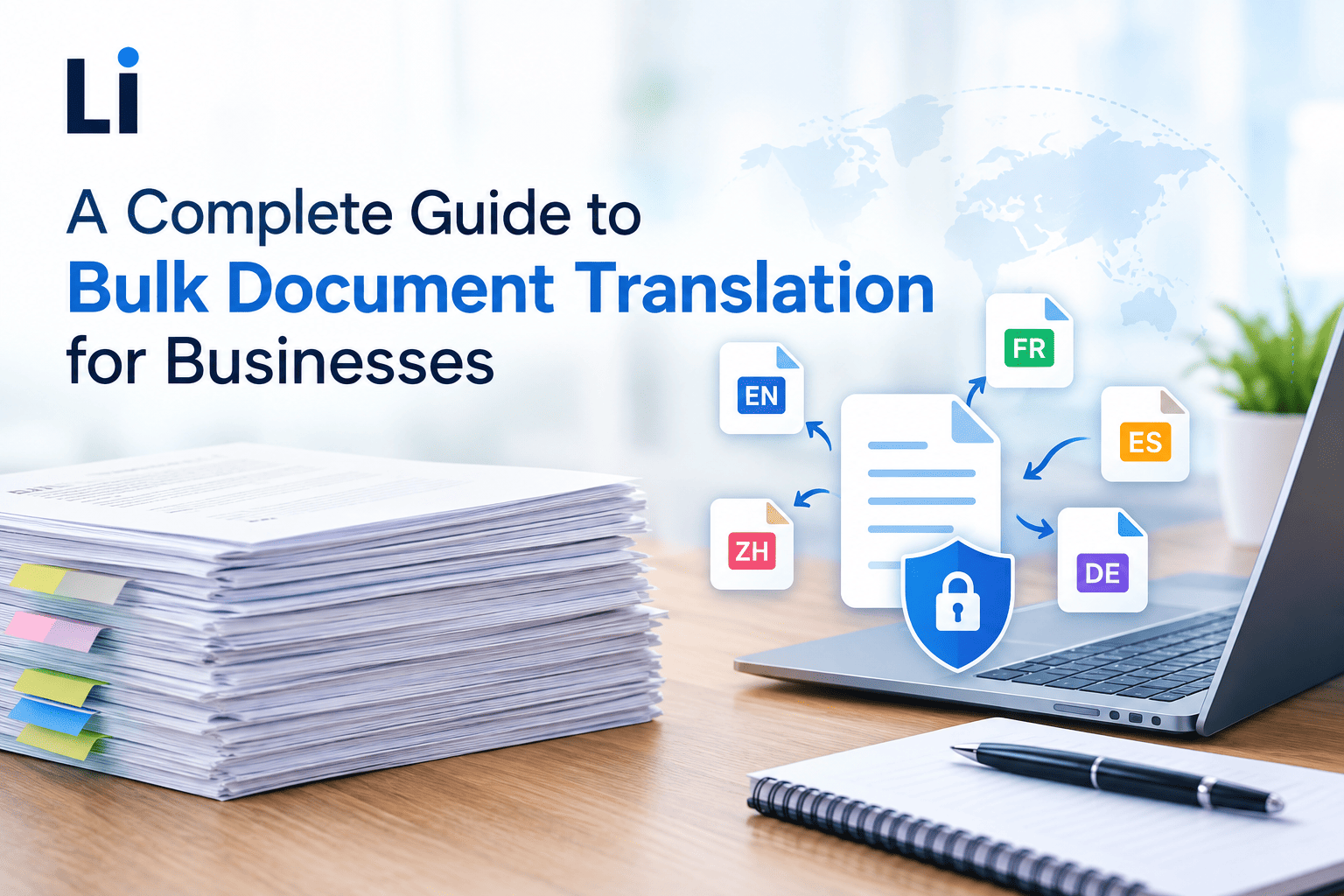
When a translation project spans many files and language, translation shifts from a simple task to a critical workflow challenge. Opening a project folder often reveals duplicate files, mixed file formats, or updated documents arriving halfway through the translation cycle. In these document translation projects, success depends as much on version control, file preparation, and terminology management as it does on linguistic expertise.
What Does Bulk Document Translation Involve?
Translating documents in bulk involves the organised translation of large collections of files across multiple languages, formats or departments. Large-scale document translation may use professional human translation, machine translation with human post-editing or a hybrid approach. The right method depends on the content, audience, deadline, and level of risk.
Prepare the File Collection Before Translation Begins
Create a Complete File Inventory
Create a master inventory listing each file’s name, format, language, word count, owner, priority, and approval status. Separate documents requiring translation from reference material, duplicate files and obsolete versions. Clearly identify the latest approved files before sharing them.
Standardise File Names and Source Formats
Avoid names such as Final_v2_NEW_Final.pdf. Instead, use clear conventions such as Product_Manual_EN_v03_2026.docx. Wherever possible, provide editable DOCX, XLSX or PPTX files. Flag scanned PDFs and image-based files early because they require additional preparation.
Build the Bulk Translation Workflow Before Assigning Linguists
Define Scope, Responsibilities and Approvals
Prepare a project matrix showing target languages, reviewers, deadlines and final approvers. Confirm whether documents are legal, regulatory, technical or customer-facing, and identify who approves terminology and answers translator queries.
Establish Version Control
Keep one approved source location instead of relying on multiple email chains. Record amendments in a change log so everyone works from the latest files. Strong version control keeps the bulk translation workflow organised and prevents unnecessary delays in bulk document translation projects.
Use Translation Memory and Terminology Glossaries Correctly
Translation memory stores approved translations and reuses them across similar documents. For organisations managing recurring document translation, this improves consistency and reduces repetitive work. Glossaries standardise company names, product terminology, legal phrases and abbreviations. Without shared terminology, different language teams may translate the same term differently. Translation memory supports consistency, but professional review remains essential.
Coordinate Languages, Teams and Phased Deliveries
Centralise Multilingual Coordination
A central project manager keeps linguists, reviewers and stakeholders aligned. Shared query logs ensure translator questions, approved client responses and terminology are available to every language team, supporting effective multilingual document management.
Deliver Documents in Planned Phases
Large translation projects rarely need every document delivered at the same time. Prioritising the most important files first allows your team to begin reviewing and using them while the remaining documents continue through translation. This staged approach keeps the project moving and makes it easier to manage deadlines.
Apply Quality Checks Across the Entire Document Collection
Check Each File
Review every document for omissions, numbers, dates, names, units, tables, hyperlinks, headings, footers, formatting, diagrams, text boxes and tracked changes.
Check Consistency Across Files
Reviewing each document on its own isn’t enough. It’s equally important to compare terminology, recurring clauses and document references across the entire collection so everything reads consistently. For technical document translation, as well as legal and regulatory documents, an additional risk-based review helps ensure accuracy and consistency from the first file to the last.
How LingArch Simplifies High-Volume Document Translation
One Managed Workflow Across Files and Languages
LingArch assesses file formats, subject matter, target languages, project volume and delivery priorities before assigning specialist linguists. Centralised project management keeps multilingual teams aligned throughout the project.
Consistent Terminology and Quality Control
LingArch combines translation memories, terminology databases, project glossaries, style guides, documented query management and independent human review to maintain consistency. With a network of 1,500+ accredited linguists across 120+ languages, LingArch can staff even the largest multilingual projects with subject-matter specialists. Combined with phased delivery, these document translation services help organisations manage complex multilingual projects efficiently. Businesses needing business document translation services also benefit from structured workflows that support consistent quality across ongoing projects.
What If an Individual Has Several Personal Documents?
If you’re translating multiple birth certificates, academic records or immigration documents, organise them by issuing authority and confirm whether certified, sworn or notarised translations are required.
Make the Document Collection Manageable Before Translation Starts
Large multilingual projects become difficult because of poor preparation, uncontrolled versions and fragmented communication, not simply because of volume. Organised files, clear naming conventions, approved terminology, centralised communication and phased delivery all contribute to smoother projects.
When requesting a quote, share the file types, target languages, subject matter, deadline and any security requirements so the workflow can be planned accurately.
Whether you need hundreds of business files translated across several languages or certified personal documents prepared for official use, LingArch can help you plan the right workflow, quality checks and delivery schedule. Email [email protected] or call +44 (0)208 004 7800 to discuss your requirements.
Frequently Asked Questions
1. What file formats are best for bulk translation?
Editable files such as DOCX, XLSX and PPTX are usually the easiest to work with because they preserve formatting and speed up the translation process. Scanned PDFs, images and handwritten documents may need OCR or additional layout work before translation can begin.
2. Should businesses choose human translation or AI?
It depends on the purpose of the document. High-risk legal, regulatory and technical content is usually best handled by specialist human linguists, while lower-risk or high-volume content may benefit from machine translation with human post-editing.
3. How do businesses keep terminology consistent across hundreds of documents?
Most organisations use translation memories, approved glossaries and style guides to ensure the same terms are used throughout a project. Combined with centralised quality checks, these tools help maintain consistency across every language and document.
4. What Is the Best Way to Deliver a Large Translation Project?
Rather than waiting until every file is finished, many businesses choose phased delivery. This allows priority documents to be reviewed and used immediately while the remaining files continue through translation.